All articles
July 14, 20269 min read

Best Handyman Scheduling Software for Growing Service Businesses (2026 Guide)

Compare Jobber, Housecall Pro, FieldVibe, OctopusPro, and ServiceTitan — and see how a connected website + calendar cuts no-shows and double-bookings for good.
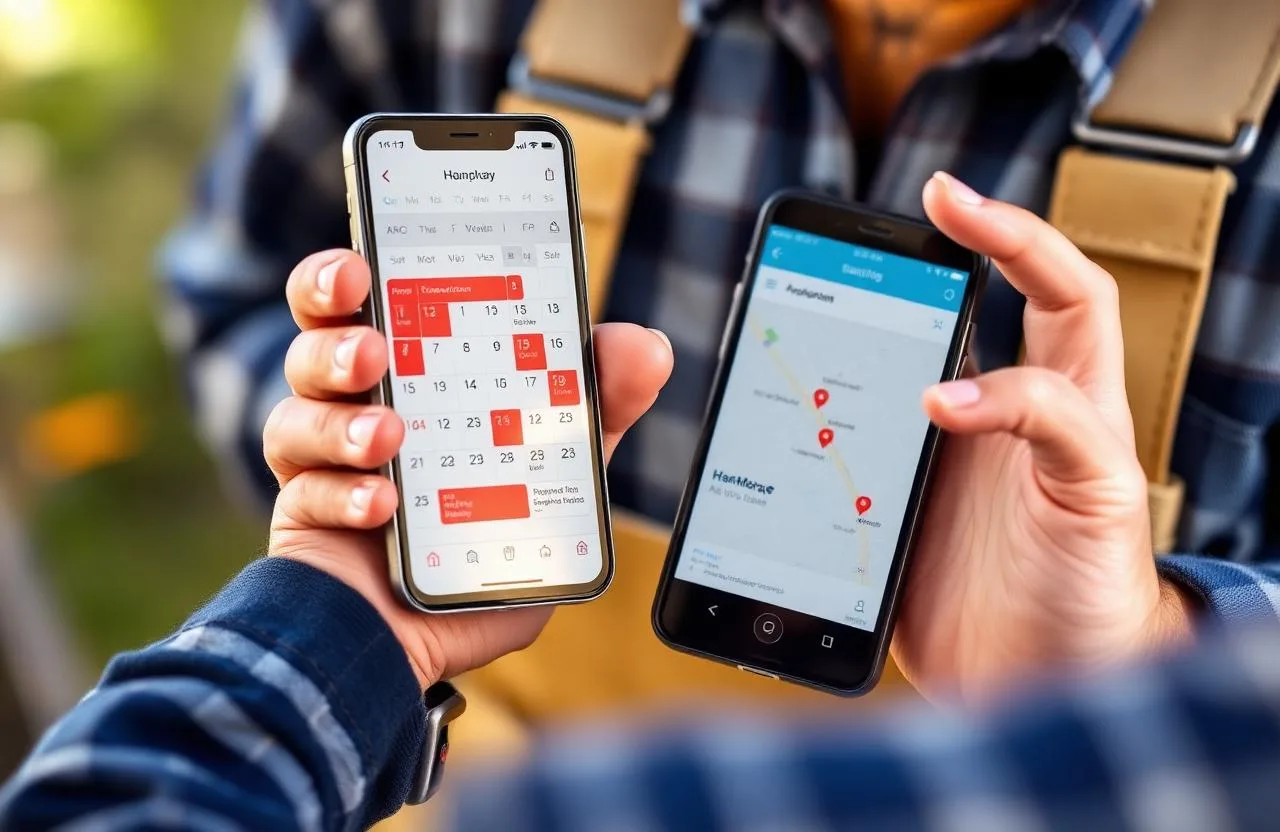
Handyman viewing job calendar and route map on smartphone scheduling app

There's a specific point where a handyman business starts to feel unmanageable — not because the work got harder, but because the calendar did. A job gets penciled in over a phone call, another gets added from a text thread, and by Thursday two customers are booked for the same 2 p.m. slot. Nobody planned for that. It just happens once volume passes what a notebook or a phone calendar can track.

Scheduling software exists to close that gap. It gives a handyman business one shared calendar, automatic customer reminders, and a record of where every technician needs to be — instead of relying on memory and back-and-forth texting to keep the week straight.

What Handyman Scheduling Software Actually Does

At its core, this kind of tool answers three questions at a glance: what's happening today, who's doing it, and what's coming up next. Every appointment sits on one calendar instead of being split across a paper book, a phone app, and a pile of sticky notes. Customers get a confirmation the moment they're booked and a reminder before the visit, without anyone having to send those messages by hand.

For a solo operator, that mostly means fewer things to remember. For a small team, it becomes the dispatch board that prevents two technicians from being sent to opposite ends of town in the same hour.

The Cost of Scheduling by Memory

No-shows. A customer who forgets an appointment, or never got a clear confirmation, costs a time slot that can't be recovered and fuel spent driving to an empty address. Automated text reminders close most of that gap — a simple day-before message does more to protect a schedule than almost any other single feature.

Double-bookings. Without a shared calendar, it's easy to say yes to two customers for the same window, especially when scheduling happens over multiple phone calls in the same day.

Wasted drive time. Jobs booked in whatever order they came in — rather than in a sensible geographic sequence — mean more time on the road and fewer jobs completed per day.

Disorganized handoffs. On a team, if a technician doesn't know the job details until they're standing on the doorstep, that's a sign the schedule lives in someone's head instead of in a system everyone can see.

What to Look For in a Scheduling Tool

  • Drag-and-drop calendar — creating or moving a job should take seconds, not a phone call
  • Conflict detection — the system should flag a double-booking before it happens
  • Automated reminders — confirmation at booking, day-before reminder, and same-day nudge
  • Route awareness — sequencing stops to cut down drive time adds up to real hours back each week
  • Mobile-first design — almost all use happens from a phone in a truck or on a job site
  • Booking that connects to your website — requests should land on the calendar as a job with details attached
  • Offline reliability — for anyone working in areas with patchy signal

Leading Scheduling Platforms in 2026

Jobber

Best for: small teams that want a polished, well-supported scheduling experience with route planning built in.

Jobber's calendar supports multiple views and automatically sequences stops to reduce drive time across a service area. Its client-facing portal lets customers approve quotes and manage their own bookings, cutting down on inbound scheduling calls. Pricing starts near $49/month for a single user, with cost climbing as more seats and features are added.

Housecall Pro

Best for: teams of two to ten that want scheduling paired with customer communication and marketing tools.

Beyond the calendar itself, Housecall Pro layers in automated text and email sequences, same-day payment collection, and review requests, giving office staff and field technicians a shared, real-time view of the day. Plans start at $59/month for a single user and scale by team size and feature tier.

FieldVibe

Best for: solo handymen and very small crews who want something simple, fast, and genuinely free to start.

FieldVibe is stripped down to just the calendar, reminders, and basic client history — no sprawling CRM to learn. Its free tier covers one person indefinitely; paid plans, starting around $20/month, add automated messaging and multiple staff accounts once a business grows past a single operator.

OctopusPro

Best for: mid-size operations that want more flexible dispatching, where field workers can accept or suggest changes to job requests rather than just receiving a fixed assignment.

OctopusPro handles online booking and payment, assigns emergency or last-minute jobs to the nearest available technician, and connects to accounting and payment tools like QuickBooks, Stripe, and Xero. Pricing isn't publicly listed and generally lands in the $50–$150/month range depending on team size.

ServiceTitan

Best for: larger operations — ten-plus technicians, heavy dispatch needs, and serious reporting requirements.

ServiceTitan's scheduling tools include AI-assisted optimization and real-time technician tracking built for scale, with pricing and implementation to match — typically starting near $398/month with a sales-led setup process. For most handyman businesses, it's considerably more platform than the job requires.

Choosing the Right Fit for Your Team Size

Start with how many people are actually on your schedule. A one-person operation needs something fast and unobtrusive — the fewer taps between "customer calls" and "job on the calendar," the better. A growing team needs shared visibility: who's free right now, what's already booked, and who's closest to a same-day request.

From there, identify the specific problem costing you the most right now. If no-shows are the issue, prioritize reminder automation. If it's double-bookings, prioritize conflict detection and a clear shared calendar. If it's slow payment, look at how tightly invoicing is connected to the job record. Chasing every feature at once usually means paying for tools nobody on the team ends up using.

Before committing to anything, install the mobile app and run a real job through it — create an appointment, move it, mark it complete. A tool that feels smooth on a phone in the field gets used every day. One that doesn't gets abandoned within a few weeks, regardless of how good the sales demo looked.

Where FixerCRM Fits In

Most scheduling tools solve the calendar problem on its own, leaving your website and lead capture as something to manage separately. A customer requests an appointment through a contact form, and someone still has to notice it, call them back, and manually add it to the calendar.

FixerCRM closes that gap by building the scheduling directly into the website itself. A booking request submitted on your site lands straight on your calendar as a job, with the customer's contact details attached — no retyping, no missed form submissions sitting in an inbox. If a call comes in while you're mid-job and can't answer, an automatic text goes out right away so that lead doesn't quietly move on to the next search result.

What's included: a custom handyman website live in 7 days, connected booking and scheduling, missed-call text-back automation, and local SEO — for a flat $97/month with no setup fee and no contract.

The goal isn't to out-feature the scheduling platforms above. It's to remove the extra step between someone finding your business online and that request actually landing on your calendar.

Final Thoughts

The best scheduling software isn't the one with the most dashboards — it's the one your business will actually use every single day, and the one that matches how many people are on your team right now. A solo handyman is usually better served by something simple and fast; a growing crew needs shared visibility and dispatch tools built for coordination.

Whatever you choose, the underlying goal stays the same: fewer double-bookings, fewer no-shows, and a calendar that runs on a system instead of a memory. If you'd rather have your booking form, calendar, and lead follow-up connected from the start, get a free quote and see what FixerCRM can set up for your business in 7 days.

Ready to grow?

See how FixerCRM books more jobs for contractors

Get Started

Related Articles

Keep reading

All articles
handyman checking customer leads from mobile phone

Why Handyman Businesses Need More Than Just a Website

Modern websites are designed to build trust and generate leads. Learn how better designs help service businesses book more jobs online.

Read article
contractor receiving missed call text back notification

How Missed Call Text-Back Helps Contractors Book More Jobs

Missed calls cost contractors thousands of dollars in lost jobs every month. Here's how automation closes the gap.

Read article
modern HVAC contractor website on desktop and mobile screen

What Makes a Good HVAC or Contractor Website?

Most contractor websites look almost the same. Here's what separates a high-converting site from an outdated brochure.

Read article
Why gutter contractors lose online leads due to poor SEO and outdated websites

Why Most Gutter Contractors Lose Leads Online (and How to Fix It)

Most gutter contractors still rely on referrals while competitors win jobs online. Here's how to stop losing leads with better SEO, websites, and CRM systems.

Read article
Local SEO strategy for handyman businesses to generate more jobs

How Local SEO Helps Handyman Businesses Get More Jobs

Most homeowners start with Google before hiring a handyman. Here's how local SEO helps your business rank higher and book more repair jobs.

Read article
Missed contractor calls leading to lost leads and revenue

Why Missed Calls Are Costing Contractors Thousands of Dollars

Every missed call can mean a lost estimate, installation, or repair project. Here's how automation recovers those leads.

Read article
Mobile-friendly contractor website optimized for SEO and lead generation

Why Mobile-Friendly Websites Matter for Contractors

Most homeowners search for contractors directly from their phones. A poor mobile experience costs you booked jobs every day.

Read article
Contractor CRM system dashboard for managing leads and projects

How CRM Systems Help Contractors Stay Organized

Missed callbacks, scheduling confusion, and lost estimates quickly become major problems. Here's how the right CRM solves them.

Read article
SEO-optimized contractor service pages for better Google rankings

Why Contractor Websites Need Service Pages for Better SEO

Cramming every service onto one page weakens local rankings. Dedicated service pages drive better SEO and more booked jobs.

Read article
HVAC technician service van with outdoor air conditioner unit

How HVAC Companies Can Generate More Service Calls Online

Referrals are unpredictable. Learn how modern websites, local SEO, and CRM automation help HVAC contractors generate service calls year-round.

Read article
Professional electrician working on residential electrical panel

Why Electricians Need Local SEO to Grow Their Business

Local SEO helps electrical contractors appear when homeowners search for emergency electricians, panel upgrades, and EV charger installations.

Read article
Plumber repairing pipes under a kitchen sink while using a tablet

How Plumbing Companies Can Book More Jobs Through Their Website

Plumbing customers need help fast. A professional website with online booking and local SEO turns urgent searches into booked jobs.

Read article
Roofing contractor inspecting shingled roof with clipboard

How Roofing Companies Can Win More Estimates Online

Roofing is a major investment. Win more estimates with a professional website, project galleries, local SEO, and a strong CRM workflow.

Read article
Professional painter rolling fresh paint on interior wall

Why Painting Contractors Need Professional Websites

Painting is highly visual. A professional website with project galleries and local SEO builds trust and drives more quote requests.

Read article
Professional handyman with toolbelt standing beside a branded service van

500+ Handyman Business Names to Help Your Company Stand Out

Browse 500+ catchy, professional, and creative handyman business name ideas — plus tips on how to choose, check availability, and register the perfect name for your company.

Read article
Smiling handyman holding smartphone with Google reviews surrounded by marketing icons

Handyman Marketing: 15 Proven Strategies to Get More Local Customers

Discover 15 proven handyman marketing strategies — local SEO, Google Business Profile, paid ads, and referral systems — that bring in more booked jobs.

Read article
essential handyman tools laid out on a workbench including cordless drill, hammer, tape measure, screwdrivers and wrenches

Essential Handyman Tools List: 50+ Must-Have Tools for Every Job

The complete list of essential handyman tools — hand tools, power tools, plumbing, electrical, drywall, safety gear, and the digital tools that run the business.

Read article
confident handyman entrepreneur standing in front of a professional work van holding a tablet at a residential job site

How to Start a Handyman Business: Step-by-Step Guide for 2026

Everything you need to know to launch a profitable handyman business — from registration and licensing to pricing, marketing, and finding your first customers.

Read article
handyman business plan document with calculator, laptop and blueprints laid out on a wooden desk

Handyman Business Plan: Step-by-Step Guide + Free Template (2026)

A practical, step-by-step guide to writing a handyman business plan — with a free template covering services, pricing, startup costs, marketing, and financial projections.

Read article
handyman in flannel shirt and tool belt shaking hands with insurance agent over policy paperwork on a wooden table

Handyman Insurance: Types, Costs & How to Choose the Right Coverage (2026 Guide)

A complete guide to handyman insurance — general liability, tools and equipment coverage, workers' comp, and commercial auto — with costs, providers, and how to choose the right coverage.

Read article
Handyman calculating a job estimate on a clipboard at a customer's home

Handyman Pricing Guide: How to Estimate Handyman Jobs for Maximum Profit (2026)

Learn how to estimate handyman jobs, calculate your minimum profitable hourly rate, choose flat vs hourly pricing, and create professional estimates that win more jobs.

Read article
Handyman using a business management app on a smartphone inside a work van

Best Handyman Business Apps to Run and Grow Your Business (2026 Guide)

Compare the best handyman business apps for 2026 — from FixerCRM, Jobber, and Housecall Pro to Thumbtack, CompanyCam, and free tools that fit any budget.

Read article
Handyman reviewing customer records and job schedule on CRM software dashboard

Best Handyman CRM Software: Manage Jobs, Customers & Grow Your Business (2026 Guide)

Compare the leading handyman CRM platforms in 2026 — Jobber, Housecall Pro, ServiceTitan, FieldPulse, Kickserv, and Joist — and see why a connected website + CRM often beats stitching separate tools together.

Read article
Handyman on job site sending a professional invoice from a smartphone app

Best Handyman Invoice Software: Get Paid Faster and Look More Professional (2026 Guide)

Compare Jobber, Housecall Pro, Joist, Wave, and Zoho Invoice — and see how on-site invoicing connected to estimates and jobs helps handymen get paid faster.

Read article
Handyman in a customer driveway building a professional itemized estimate on a tablet

Best Handyman Estimate Software: Create Fast, Professional Quotes That Win More Jobs (2026 Guide)

Compare Jobber, Housecall Pro, Joist, QuoteIQ, and ServiceTitan — and see how connected estimating turns fast, professional quotes into booked jobs.

Read article
Handyman dispatch scheduling software calendar planner shown on a tablet

Best Dispatch Software for Multi-Technician Handyman Teams (2026 Guide)

Compare the top dispatch platforms for multi-tech handyman teams and see how real-time job assignment stops double-booked crews and wasted drive time.

Read article
Handyman measuring sheet metal at a workbench — handyman CRM vs scheduling software comparison

CRM vs. Scheduling Software: What Handyman Businesses Actually Need First

CRM or scheduling software first? Here's how to tell which one actually fixes the bottleneck in your handyman business — and when you need both.

Read article
Handyman in branded uniform on smartphone in front of a home — handyman lead generation

Handyman Lead Generation: 15 Proven Ways to Get More Local Jobs in 2026

Fifteen lead generation strategies that hold up in 2026, how to convert leads into booked jobs, and where automation fits in.

Read article
Laptop and smartphone showing handyman business software dashboard on a workbench — best handyman software 2026

Best Handyman Software in 2026: Complete Guide to Running a Smarter Handyman Business

Compare the best handyman software for 2026 — CRM, scheduling, estimating, and invoicing — and match a platform to your team size and budget.

Read article